
From fruit to cup: the invisible journey of good coffee
When we open a bag of coffee, we usually see only the final result: roasted beans, intense aroma and the promise of a good cup. But before reaching that point, coffee has travelled a long road full of decisions, skilled hands and small details that make a real difference.
Coffee does not begin in a machine. It begins as a fruit. And understanding that journey helps us appreciate each cup a little more.
Everything starts with the plant
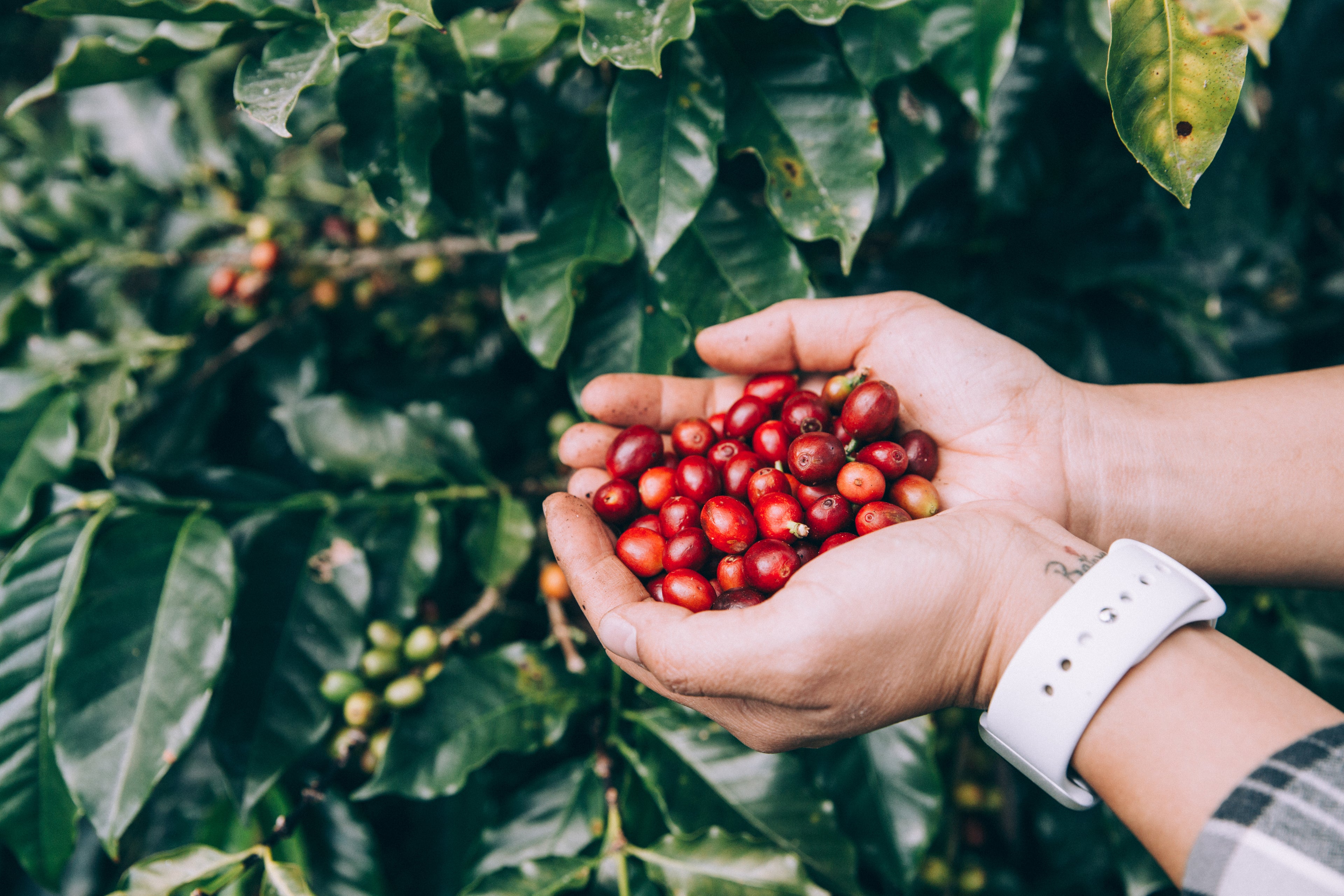
Coffee grows as a cherry. Inside each fruit, there are usually two seeds: what we later know as coffee beans.
Altitude, climate, soil, variety and plant care all have a direct influence on the final character of the coffee. That is why two coffees from the same country can taste completely different.
Good coffee begins long before roasting. It begins in the field.
Harvest: choosing the right moment
The ripeness of the coffee cherry is essential. A cherry that is too unripe can bring harsh or vegetal notes. One that is overripe can create unwanted fermented flavours.
That is why, in higher-quality coffees, selection during harvest is so important. Picking the fruit at the right moment helps create more sweetness, more balance and a cleaner cup.
It is patient work, often done by hand, and it has a huge impact.
Processing changes the character
After harvest, coffee needs to be processed. This is where methods such as natural, washed or honey come in.
Each process transforms coffee in a different way:
- natural can bring more sweetness, body and fruit
- washed often highlights cleanliness, clarity and elegance
- honey can offer an interesting balance between sweetness and smoothness
This is not just a technical step. It is a decisive part of flavour.
Drying, selection and patience
Once processed, coffee must be dried correctly. If drying is too fast, uneven or careless, quality can suffer.
Then comes selection. Defective beans are removed, the coffee is sorted and prepared for transport. All of this happens before the coffee even reaches the roaster.
When a coffee bag shows origin, process, variety or tasting notes, there are many decisions behind that information.
Roasting: revealing, not hiding
Roasting should not hide the origin of the coffee. It should reveal it.
A well-developed roast aims to bring out the best in the bean: sweetness, acidity, body, aroma and balance. If coffee is roasted too dark, many nuances disappear. If it is roasted without precision, the cup can become flat or unbalanced.
In specialty coffee, roasting is not just heat. It is interpretation.
The final part happens at home
The journey does not end when you buy the coffee. The final part happens when you brew it.
Grind size, water, recipe, equipment cleanliness and storage all directly influence the final result.
A coffee with so much work behind it deserves careful preparation. It does not have to be complicated, but it should be respectful.
A cup with a story
Every cup of coffee brings together many stages: a plant, a harvest, a process, drying, selection, transport, roasting and brewing.
That is why specialty coffee is not simply “expensive coffee” or “different coffee”. It is coffee with traceability, intention and a clearer story.
The next time you prepare a cup, think for a moment about everything that happened before that first sip. Coffee can taste a little different when you know what it carries within.
98% Monkey and respect for origin
At 98% Monkey, we believe every coffee should preserve part of its story. That is why we value origin, process, sensory profile and careful roasting.
Because good coffee does not begin in the cup. It ends there.